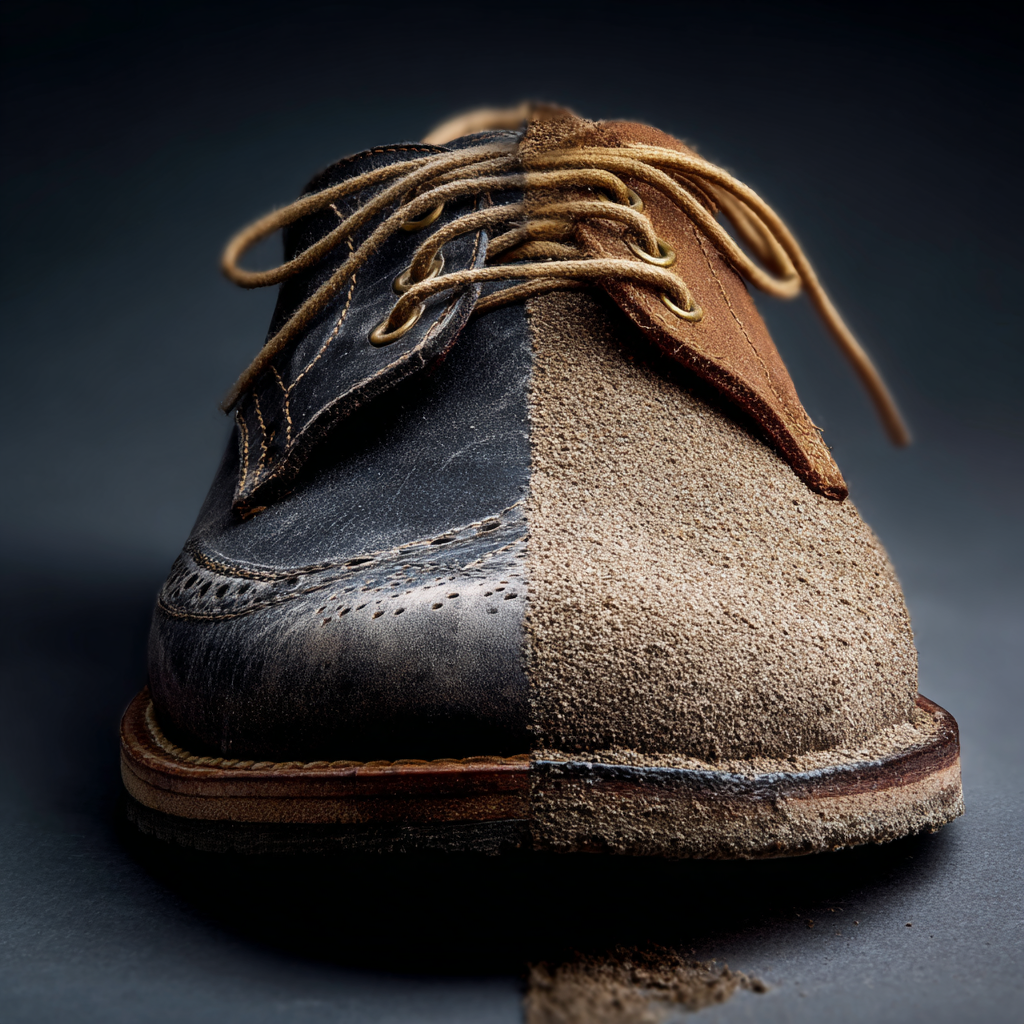
Shoes are among the most used and most neglected items in everyday life. People rely on them for work, travel, formal events, and daily comfort, yet many only think about care when visible damage has already appeared. Scuffed leather, worn soles, broken stitching, fading color, cracked surfaces, and loss of shape are common problems that build up over time. At that point, many owners face an important question: should the shoes be treated at home, or is it time to take them to a professional workshop?
The answer depends on the condition of the shoes, the material, the type of damage, and the result the owner wants to achieve. At-home shoe care and professional restoration are not opposites. They serve different purposes. One helps preserve shoes in good condition. The other helps recover shoes that have already lost part of their function, appearance, or structure. Understanding the difference between the two is essential for anyone who wants footwear to last longer and look better over time.
At-home shoe care is the first and most regular level of maintenance. Its main purpose is prevention. When done consistently, it slows down wear, protects materials, and keeps shoes presentable between heavier interventions. This kind of care usually includes cleaning dirt and dust, conditioning leather, polishing surfaces, brushing suede, airing interiors, using shoe trees, and storing footwear correctly. These steps are simple, accessible, and highly valuable.
For leather shoes, home care often begins with gentle cleaning. Dust, mud, and urban residue should be removed before they settle into the material. A soft brush or cloth is usually enough for routine care. Once the surface is clean, leather benefits from conditioning, since dry leather becomes more vulnerable to cracking and stiffness. Creams and conditioners help maintain flexibility and preserve the natural look of the material. Polishing also improves appearance and adds a light layer of protection.
For suede or nubuck shoes, the process is different. These materials require softer tools and more caution. A specialized brush can help lift the nap and remove light surface marks, while protective sprays may reduce vulnerability to moisture and stains. Home care for these materials is less about shine and more about preserving texture and preventing deep damage.
Storage is another important part of at-home care. Shoes that are left in damp spaces, crushed in closets, or worn repeatedly without rest will deteriorate faster. Shoe trees can help maintain shape, especially for leather shoes, and proper drying after rain is essential. These may seem like small habits, but they have a major effect on how footwear ages.
However, at-home care has limits. It is designed to maintain, not reconstruct. Once shoes have developed structural problems, deep surface damage, or material failure, home products are rarely enough. In some cases, using the wrong product at home can even make things worse. Over-conditioning may darken leather, aggressive cleaning may remove finish, and poor color matching may create uneven surfaces. DIY repair attempts often focus on quick visual improvement but fail to solve the real problem underneath.
This is where professional restoration becomes important. A workshop does more than clean or polish shoes. It addresses damage that affects function, appearance, and longevity at a deeper level. Professional restoration is not simply “better cleaning.” It is skilled intervention based on material knowledge, repair techniques, specialized tools, and craftsmanship.
One of the clearest differences lies in sole and heel repair. At home, a person may clean the sole or try temporary adhesive solutions, but proper restoration of worn soles or damaged heels requires technical precision. A workshop can replace sole sections, rebuild heel blocks, reattach layers correctly, and ensure the balance of the shoe remains intact. This is especially important for quality footwear, where poor repair can affect comfort, walking stability, and the overall life of the shoe.
Professional restoration is also essential when leather has become heavily scratched, faded, dried out, or discolored. A workshop can assess whether the surface needs recoloring, nourishing treatment, refinishing, or more advanced correction. Unlike basic home creams, professional products and techniques are designed to restore visual depth and evenness while respecting the character of the original material. This is particularly valuable for premium leather footwear, where appearance is closely tied to the quality of the finish.
Stitching and structural issues are another area where professional work matters. Loose seams, detached parts, damaged linings, and weakened construction cannot be solved with ordinary household methods. A workshop can restitch affected areas, reinforce weak sections, replace internal components, and preserve the original shape of the shoe. These interventions often go unnoticed by casual observers, but they make a major difference in comfort and durability.
Professional restoration also brings judgment, and this is something home care cannot provide. A skilled craftsperson does not only repair what is visible. They evaluate whether the material is still healthy, whether the damage is superficial or deep, and which treatment is appropriate for that specific shoe. Two pairs may appear equally worn to the owner, but one may need only cosmetic refreshing while the other requires structural restoration. This kind of evaluation prevents unnecessary treatments and helps protect valuable footwear from poor decisions.
Another important difference is the quality of finish. At home, shoe care usually aims for cleanliness and basic presentation. In a workshop, restoration aims for a more complete recovery of the shoe’s original character. This can include color balancing, edge finishing, sole detailing, reshaping, and careful attention to how the repaired area blends with the rest of the shoe. The result is not merely a cleaner shoe, but a more coherent and professionally revived one.
This distinction matters even more for expensive or sentimental shoes. High-quality leather footwear, handcrafted shoes, designer pairs, or shoes with personal value deserve a different standard of care. Replacing such pairs is not always practical or desirable. In many cases, restoration is the smarter choice because it preserves both material value and personal attachment. A workshop can often extend the life of footwear by years, especially when care and repair are combined at the right time.
That said, professional restoration does not replace home care. In fact, the best results come when both work together. Regular home maintenance reduces the speed of deterioration and helps shoes reach the workshop in better condition when real repair becomes necessary. Meanwhile, professional restoration resets the condition of the footwear when routine care is no longer enough. One is preventive. The other is corrective and restorative.
The smartest approach is therefore not to choose one instead of the other, but to understand when each is appropriate. Home care is ideal for cleaning, conditioning, protection, and everyday preservation. Professional restoration is the right choice for worn soles, damaged heels, deep scratches, fading, broken stitching, loss of structure, or significant material fatigue. Knowing that boundary can save money, preserve quality, and prevent avoidable damage.
In the end, the difference between at-home shoe care and professional restoration is the difference between maintenance and recovery. Home care protects shoes while they are still in manageable condition. Professional restoration gives them a second life when ordinary care is no longer enough. Together, they form the most effective strategy for anyone who values durability, comfort, and the lasting beauty of well-made footwear.